

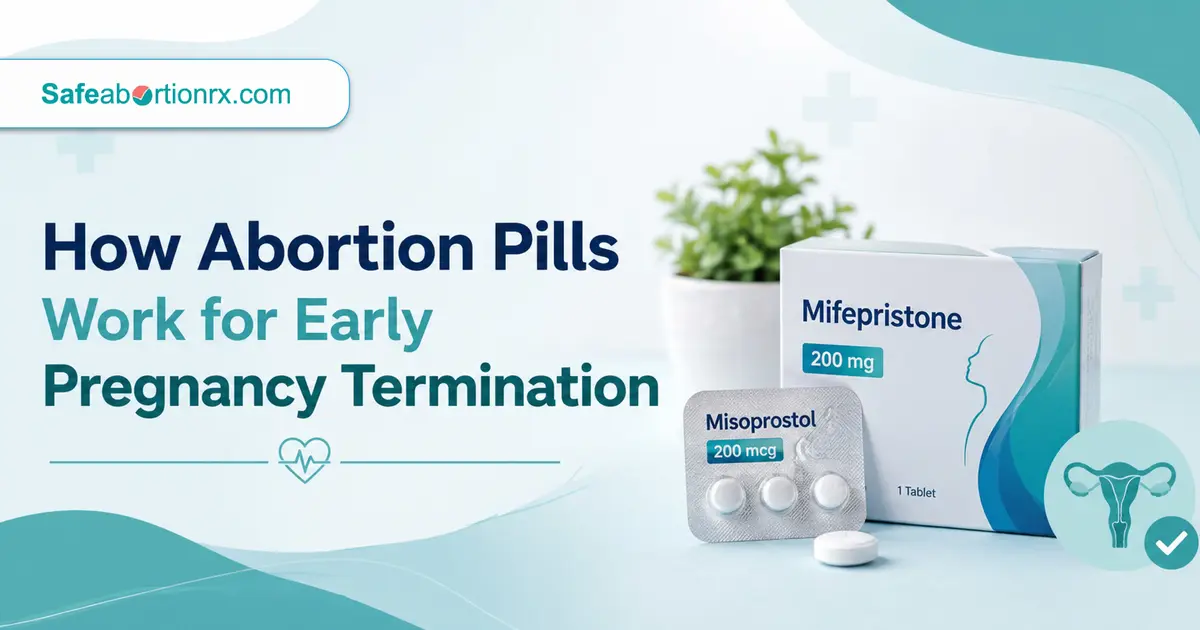
The abortion pill works using two medications—Mifepristone and Misoprostol—to safely end an early pregnancy. It first blocks pregnancy hormones and then triggers uterine contractions to expel pregnancy tissue, typically under medical supervision within the first 10 weeks.
Quick Summary
- The abortion pill is a two-medication regimen
- It includes Mifepristone + Misoprostol
- It works in two steps: hormone blocking + uterine contractions
- It is used in early pregnancy termination
- It is most effective when used under medical supervision
What is the Abortion Pill?
The abortion pill refers to a combination of two prescription medications used together in a medical abortion protocol:
These two medicines are designed to work in sequence. Mifepristone prepares the body by stopping the pregnancy from progressing, while Misoprostol completes the process by triggering uterine contractions.
Together, they provide a complete medical method for early pregnancy termination without surgical intervention.
How Abortion Pill Works for Early Pregnancy Termination
The abortion pill works in a two-step medical process. Each step plays a specific role in ending the pregnancy safely and effectively.
Step 1: Mifepristone Blocks Pregnancy Hormone Support
Mifepristone is the first medication taken in the process.
It works by:
- Blocking the hormone progesterone
- Progesterone is essential for maintaining pregnancy
- Without it, the uterine lining begins to break down
- The pregnancy detaches from the uterine wall
This step does not complete the abortion on its own but prepares the uterus for the next phase of the process by stopping pregnancy progression.
Step 2: Misoprostol Induces Uterine Contractions
Misoprostol is taken after Mifepristone, as directed by a healthcare provider.
It works by:
- Stimulating uterine contractions
- Softening and opening the cervix
- Helping expel pregnancy tissue from the uterus
This step completes the medical abortion process by ensuring the uterus clears its contents naturally.
Clinical Experience Overview
In our review of clinically documented medical abortion protocols, the two-step regimen remains the most widely used and evidence-supported method for early pregnancy termination.
Medical practitioners widely use this protocol due to its established safety and effectiveness in early gestational stages.
Case Study: Typical Medical Abortion Timeline
Observed Clinical Pattern (Up to 10 Weeks Gestation)
- Day 1: Mifepristone administration begins hormonal disruption
- 24–48 hours later: Misoprostol taken as directed
- 3–6 hours after Misoprostol: Cramping and bleeding begin
- 3–5 days: Pregnancy tissue is typically expelled
- 7–14 days: Body returns toward normal menstrual cycle
Observed Clinical Outcomes
- Predictable progression in most cases
- High effectiveness in early pregnancy
- Non-surgical resolution in majority of cases
This timeline represents a general overview and should not replace medical advice.
Effectiveness of Abortion Pills
Abortion pills are highly effective when used correctly under medical supervision, especially in early pregnancy (up to 10 weeks).
Effectiveness depends on:
- Gestational age of pregnancy
- Proper dosage and timing
- Individual health conditions
- Medical supervision and follow-up care
In most cases, medical abortion is successful when all guidelines are followed correctly.
Safety and Medical Supervision
Medical supervision is essential when using abortion pills. A healthcare provider ensures that the process is evidence-supported for the individual.
Supervision includes:
- Confirming eligibility for medical abortion
- Providing correct dosage instructions
- Monitoring side effects and complications
- Ensuring the abortion is complete
Self-medication without medical guidance can increase risks and is not recommended.
Possible Side Effects
Some side effects are expected during the process as the body responds to the medications.
Common side effects include:
- Cramping in the lower abdomen
- Heavy bleeding
- Nausea or vomiting
- Fatigue or weakness
- Mild fever or chills
These symptoms are usually temporary. However, severe pain, excessive bleeding, or prolonged symptoms should be evaluated by a healthcare provider immediately.
When to Seek Medical Help
Seek medical attention if:
- Bleeding is excessively heavy
- Severe abdominal pain occurs
- Fever persists for more than 24 hours
- No bleeding occurs after medication
FAQs
1. How does the abortion pill work in simple terms?
It first stops pregnancy growth using Mifepristone and then uses Misoprostol to help the uterus expel pregnancy tissue.
2. Is one pill enough for abortion?
No. Both Mifepristone and Misoprostol are required for a complete and effective process.
3. How long does the abortion pill take to work?
The process begins within hours after Misoprostol and usually completes within a few days.
4. Is the abortion pill safe?
It is considered safe when used under proper medical supervision and within the recommended pregnancy period.
Conclusion
The abortion pill works through a structured two-step medical process involving Mifepristone and Misoprostol. Together, they safely terminate early pregnancy by first blocking hormonal support and then inducing uterine contractions to complete the process under medical supervision.
Medical References & Trusted Sources
- World Health Organization (WHO) – Guidance on safe medical abortion protocols and clinical recommendations. https://www.who.int/publications/i/item/9789240039483
- American College of Obstetricians and Gynecologists (ACOG) – Clinical guidelines on medication abortion safety and effectiveness. https://www.acog.org/womens-health/faqs/medication-abortion
- Mayo Clinic – Medical overview of how abortion pills work and expected effects. https://www.mayoclinic.org/tests-procedures/medical-abortion/about/pac-20394687
- NHS (UK National Health Service) – Patient information on medical abortion process and safety. https://www.nhs.uk/conditions/abortion/
- U.S. Food and Drug Administration (FDA) – Regulatory labeling and approved usage information for mifepristone. https://www.fda.gov/
Disclaimer: This content is for educational purposes only. It should only be used under the supervision of a qualified healthcare professional. Always consult a doctor before starting any medical abortion.