

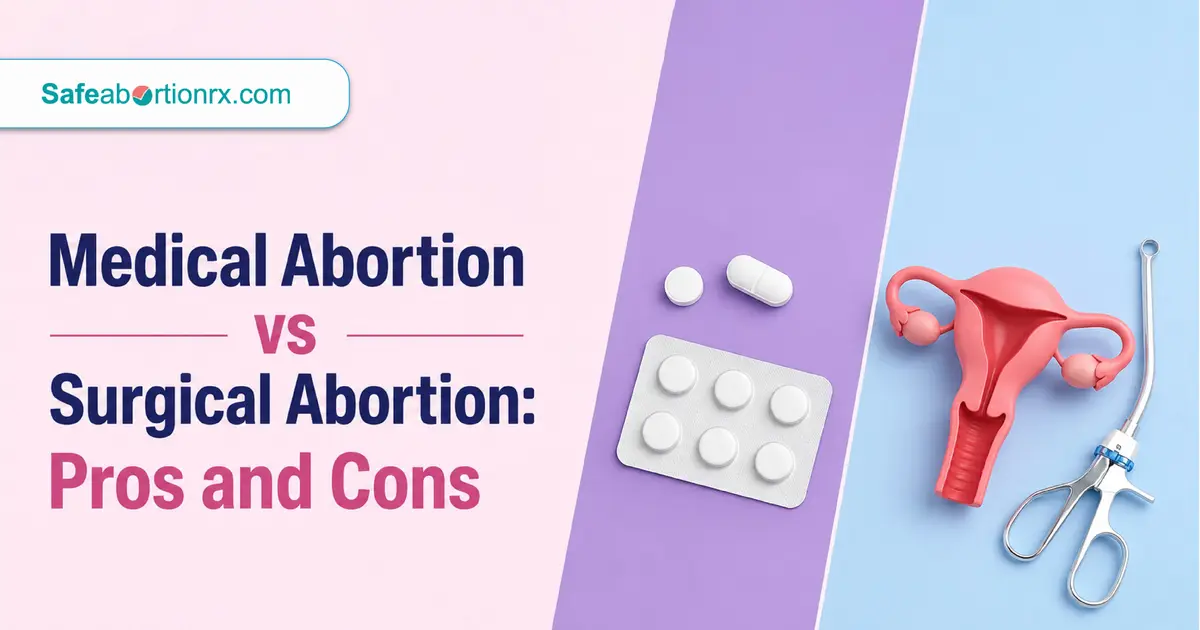
Medical Abortion vs Surgical Abortion are both safe and effective methods to end a pregnancy. Medical abortion uses prescribed pills while surgical abortion is a clinic-based procedure. Choice depends on gestational age, health, and medical guidance. Both methods are widely used in healthcare settings with strong safety profiles when performed under professional supervision and appropriate screening.
What is Medical Abortion?
Medical abortion is a non-surgical method that uses prescription medications (commonly mifepristone and misoprostol) to end an early pregnancy, usually within the first 10–12 weeks.
It works by:
- Blocking pregnancy-supporting hormones
- Causing the uterus to contract and expel pregnancy tissue
This method is typically done at home or in a clinical setting with follow-up care.
What is Surgical Abortion?
Surgical abortion is a medical procedure performed in a clinic or hospital. It involves removing pregnancy tissue through vacuum aspiration or dilation and evacuation (D&E), depending on gestational age.
It is performed by trained healthcare professionals under sterile conditions, usually with local anesthesia or sedation.
Medical Abortion vs Surgical Abortion: Key Differences
| Feature | Medical Abortion | Surgical Abortion |
| Method | Pills | Minor surgical procedure |
| Setting | Home/clinic | Clinic/hospital |
| Gestational age | Early pregnancy | Early to later stages |
| Duration | 24 hours to a few days | Usually 10–30 minutes |
| Pain level | Cramping and bleeding | Minimal during procedure |
| Follow-up | Required | Usually minimal |
Pros and Cons of Medical Abortion
| Advantages | Disadvantages |
|---|---|
| Non-invasive (no surgery) | Longer process (hours to days) |
| Can be done in privacy at home | Heavier bleeding and cramping |
| Feels more natural for some individuals | Requires follow-up confirmation |
| High effectiveness in early pregnancy | Not suitable for all medical conditions or later pregnancy stages |
Pros and Cons of Surgical Abortion
| Advantages | Disadvantages |
|---|---|
| Quick procedure (usually same-day completion) | Invasive procedure |
| Highly effective with minimal failure rate | Requires clinic or hospital visit |
| Less prolonged bleeding afterward | May involve sedation or anesthesia |
| Performed under direct medical supervision | Slight risk of procedural complications (rare) |
Safety and Effectiveness
Both medical and surgical abortion are considered safe when performed under proper medical care. Effectiveness is high for both methods:
- Medical abortion: ~95–99% effective (early pregnancy)
- Surgical abortion: >99% effective
Complications are rare but may include infection, incomplete abortion (medical), or procedural risks (surgical).
Cost Comparison: Medical Abortion vs Surgical Abortion
| Factor | Medical Abortion (US) | Surgical Abortion (US) |
|---|---|---|
| Average Cost Range | ~$150 to $800 | ~$400 to $1,500+ |
| Early Pregnancy (1st trimester) | Usually on the lower end ($150–$500) | Typically $400–$900 |
| Later Gestational Age | May increase slightly or not available | Can rise significantly ($1,000–$1,500+) |
| What Affects Cost | Medication (mifepristone/misoprostol), clinic fees, telehealth consults | Procedure type, anesthesia/sedation, facility charges, provider expertise |
| Additional Costs | Follow-up ultrasound or lab test ($50–$200 if not included) | Sedation/anesthesia fees, aftercare medications, clinic facility fees |
| Insurance Coverage | Varies widely; some private plans and Medicaid (limited states) may cover partially | More likely to be covered in some insurance plans, but state restrictions may apply |
| Telehealth Option Impact | Can reduce cost significantly in some states | Not applicable (requires in-person procedure) |
Recovery Differences
- Medical abortion recovery: Can take several days to weeks with bleeding and cramping.
- Surgical abortion recovery: Usually faster physical recovery, with lighter bleeding.
Emotional recovery varies individually and may benefit from counseling or support.
When Each Option May Be Recommended
A healthcare provider may suggest:
- Medical abortion: Early pregnancy, preference for non-invasive method
- Surgical abortion: Later stages, medical conditions, or preference for a quicker procedure
Possible Side Effects
Medical Abortion
- Cramping
- Heavy bleeding
- Nausea or fatigue
- Fever (temporary)
Surgical Abortion
- Mild cramping
- Light bleeding
- Drowsiness from anesthesia (if used)
Frequently Asked Questions (FAQs)
1. Which is safer: medical or surgical abortion?
Both are safe when done under medical supervision. Safety depends on timing, health, and provider guidance.
2. Is medical abortion painful?
It can involve strong cramping similar to heavy menstrual pain.
3. How long does surgical abortion take?
The procedure itself usually takes 10–30 minutes, with additional recovery time.
4. Can complications happen?
Serious complications are rare for both methods, especially with proper medical care.
Conclusion
Medical abortion and surgical abortion are both effective and safe options for pregnancy termination when performed under medical supervision. The best choice depends on pregnancy stage, health condition, and personal preference. Consulting a qualified healthcare provider is essential for safe decision-making and appropriate care.
Disclaimer: This content is for educational purposes only. MTP Kit should only be used under the supervision of a qualified healthcare professional. Always consult a doctor before starting any medical abortion.