

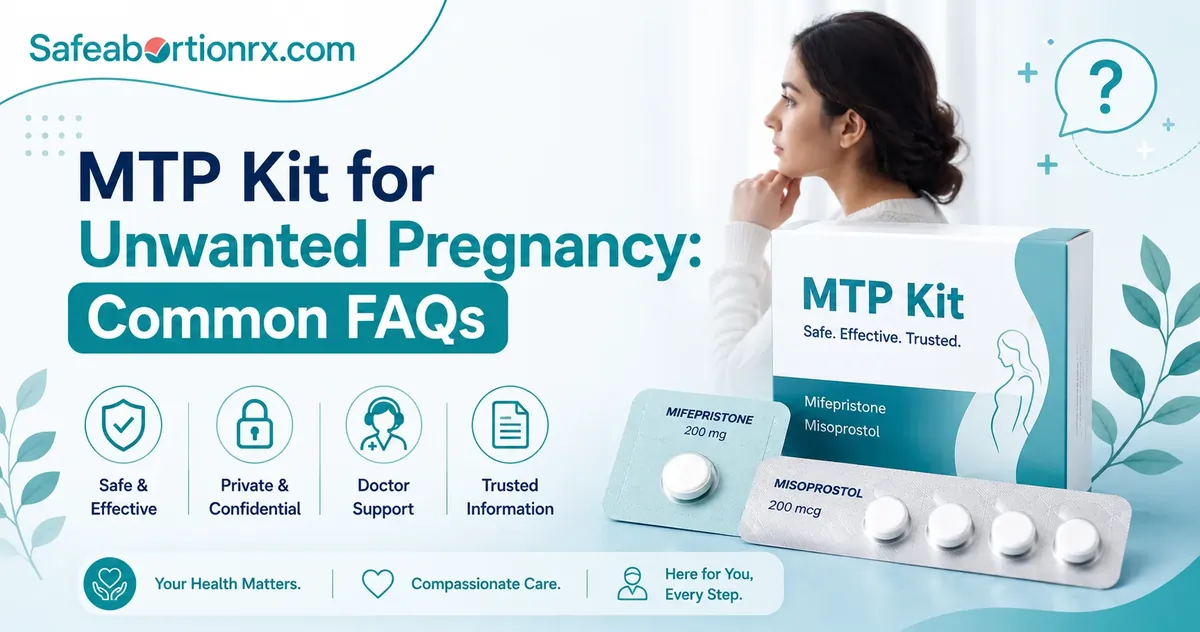
Medication abortion uses medicines to end an early pregnancy. Understanding how the medicines work, what symptoms may occur, and what follow-up care involves can help people make informed decisions.
For product information, including ingredients and details, see the MTP Kit product page.
This guide answers common questions about the medication abortion process, expected symptoms, recovery, and when medical attention may be needed.
What medicines are used in medication abortion?
Medication abortion commonly uses two medicines: mifepristone and misoprostol. Mifepristone blocks progesterone, a hormone needed to sustain pregnancy. Misoprostol causes the uterus to contract and expel the pregnancy tissue.
The medicines, recommended regimen, and eligibility depend on factors such as gestational age, medical history, and applicable clinical guidance. A qualified healthcare professional can help determine which approach is appropriate.
Common questions about medication abortion
How does medication abortion work?
Mifepristone blocks the action of progesterone, while misoprostol causes uterine contractions. Together, these medicines can end an early pregnancy. The process and timing vary from person to person.
What are the safety considerations?
Medication abortion has established clinical uses, but it is not appropriate for every situation. Medical assessment helps identify relevant health conditions, evaluate pregnancy duration, and determine whether additional evaluation or care is needed. Follow reliable medical instructions and seek professional advice if you are uncertain about any part of the process.
How effective is medication abortion?
Effectiveness depends on factors including gestational age and the regimen used. Some people need additional treatment if the abortion is incomplete or the pregnancy continues. Follow-up guidance can help establish whether the process is complete.
What symptoms can occur during medication abortion?
Cramping and vaginal bleeding are expected for many people. Nausea, vomiting, diarrhea, chills, and a temporary fever may also occur, particularly after misoprostol. The intensity and duration of symptoms vary.
How long can bleeding continue?
Bleeding is often heaviest during the initial part of the process and usually decreases afterward. Lighter bleeding or spotting may continue for days or sometimes several weeks. Seek medical advice if bleeding concerns you, becomes unusually heavy, or is accompanied by weakness, dizziness, or other concerning symptoms.
When should you seek medical attention?
Seek urgent medical care for severe or persistent abdominal pain, fainting, difficulty breathing, or very heavy bleeding. A commonly used warning threshold is soaking two full-size sanitary pads per hour for two consecutive hours. Contact a healthcare professional promptly if you have a persistent fever, worsening pain, foul-smelling discharge, or feel seriously unwell.
What if the abortion is incomplete or the pregnancy continues?
An incomplete abortion or continuing pregnancy may require additional assessment and treatment. Contact a qualified healthcare professional if symptoms do not follow the expected course, pregnancy symptoms persist, or follow-up testing indicates that the pregnancy may be continuing.
When can fertility return after abortion?
Ovulation can return relatively soon after an abortion, sometimes within a few weeks. Pregnancy can occur before the next menstrual period. Anyone wishing to avoid pregnancy can discuss contraceptive options with a healthcare professional.
Is medication abortion painful?
Cramping is common and can range from mild to severe. The level of discomfort varies. A healthcare professional can advise on suitable pain relief and explain which symptoms require further evaluation.
Is follow-up care necessary?
Follow-up recommendations depend on the clinical circumstances and the instructions provided by the healthcare professional. Follow the recommended plan to confirm that the abortion is complete. Additional assessment may be needed if symptoms persist, the result is uncertain, or there are concerns about ongoing pregnancy.
Key takeaways
Medication abortion involves medicines that end a pregnancy, with symptoms and recovery varying from person to person. Understanding expected symptoms, warning signs, and follow-up recommendations helps people make informed decisions. Seek qualified medical advice when you have concerns about eligibility, symptoms, or whether the process is complete.
Disclaimer: This content is for educational purposes only. MTP Kit should only be used under the supervision of a qualified healthcare professional. Always consult a doctor before starting any medical abortion.